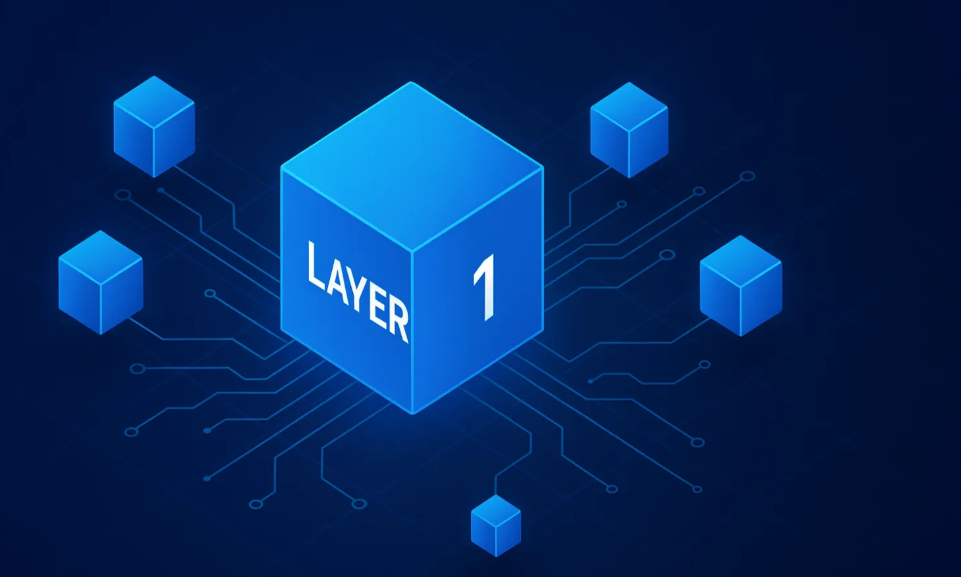
A Layer 1 blockchain is the base protocol that governs security, consensus, and data availability. It operates autonomously, maintaining decentralization while supporting auditable, verifiable computations. Security is centralized at the validator layer, with governance and upgrades baked into the chain. Through optimized consensus, sharding, or pipelining, it aims for scalable throughput without compromising trust minimalism. The architecture invites scrutiny: how will future upgrades preserve autonomy and cross-chain resilience as demands grow?
What Is Layer 1 Blockchain? Foundations and Functions
Layer 1 blockchain refers to the base protocol layer that underpins a blockchain network, handling consensus, security, and data availability without relying on higher layers. It emphasizes rigorous fault tolerance, verifiable computations, and predictable throughput. This foundation enables blockchain scalability through optimized consensus and sharding mechanisms, while preserving distributed governance and trust minimalism, ensuring autonomous security properties, censorship resistance, and programmatic freedom without centralized surrender.
How Layer 1 Differs From Layer 2 Solutions
To distinguish Layer 1 from Layer 2 solutions, one must examine where responsibility for consensus, security, and data availability resides. Layer 1 centralizes core security models and governance dynamics, controlling validation and data throughput.
Layer 2 delegates throughput and modularity, preserving Layer 1 integrity. This separation enables scalable customization while sustaining security assurances for freedom-minded participants.
How Layer 1 Achieves Security, Decentralization, and Consensus
How do Layer 1 systems enforce trust, enable decentralization, and reach consensus without sacrificing performance? A security model anchors cryptographic proofs, fault tolerance, and formal invariants, while validators sustain global consensus. Transaction throughput scales via sharding or pipelining, balancing decentralization tradeoffs. Governance mechanisms coordinate updates, upgrades, and dispute resolution, preserving autonomy and freedom within a robust, auditable, low-level architecture.
Popular Layer 1 Ecosystems and What Sets Them Apart
Popular Layer 1 ecosystems span a spectrum from high-throughput, permissionless rails to security-first, interoperable networks. Each chain emphasizes distinct guarantees: modular execution, robust cryptography, and predictable finality. Decentralized governance shapes upgrades without central vetoes, while cross chain interoperability enables asset and data movement. Security-minded design favors verifiable persistence, scalable sharding, and low-level interoperability hooks for freedom-minded developers and users.
Frequently Asked Questions
How Do Layer 1 Blockchains Handle Scaling Without Sharding?
Layer 1 blockchains handle scaling without sharding by optimizing consensus throughput, enabling optimistic or lightweight finality, and enhancing cross-node parallelism; layer economics and validator incentives align security with throughput, ensuring robust security, governance, and freedom-oriented, scalable system design.
What Exactly Is a Block, and How Is It Validated?
A solitary ledger beacon, a block is a sealed group of transactions; validation occurs via cryptographic proofs and consensus mechanisms. Insecure tampering is deterred by immutable hashes, probabilistic finality, and distributed security, ensuring scalable, freedom-minded trust.
Why Do Some L1S Use Sharding or Alternative Consensus?
Sharding and alternative consensus address scale and security trade-offs, partitioning state and workload while preserving cross-shard validity. This approach enhances throughput, mitigates centralization, and supports token allocation, governance mechanics, and user freedom within resilient Layer 1 ecosystems.
How Do Layer 1s Handle Cross-Chain Interoperability?
Cross-chain interoperability is achieved through interoperability protocols and cross chain messaging, enabling secure, scalable asset and data transfers. The layer 1 author implements standardized cryptographic handshakes, verifiable bridges, and fail-safes to preserve sovereignty and freedom while minimizing attack surfaces.
What Are the Economic Incentives for Validators on L1S?
Validators incentives on L1s arise from staking rewards and protocol-defined emission schedules, aligning validator security with system throughput. These incentives promote honest validation, penalize misbehavior, and scale via efficient slashing, liquidity provisions, and interoperable cross-chain staking architectures.
Conclusion
A Layer 1 blockchain underpins trust, security, and governance, delivering base consensus, data availability, and upgrades with verifiable integrity. In a security-minded, low-level lens, it isolates core primitives—validator sets, finality, and cross-chain messaging—while enabling scalable execution through architecture choices like sharding or pipelining. An anachronistic spark—digitial stones in the bronze age—reminds us that robustness endures as systems evolve. Layer 1 remains the sovereign frame for trustworthy, decentralized computation and interoperable value.
